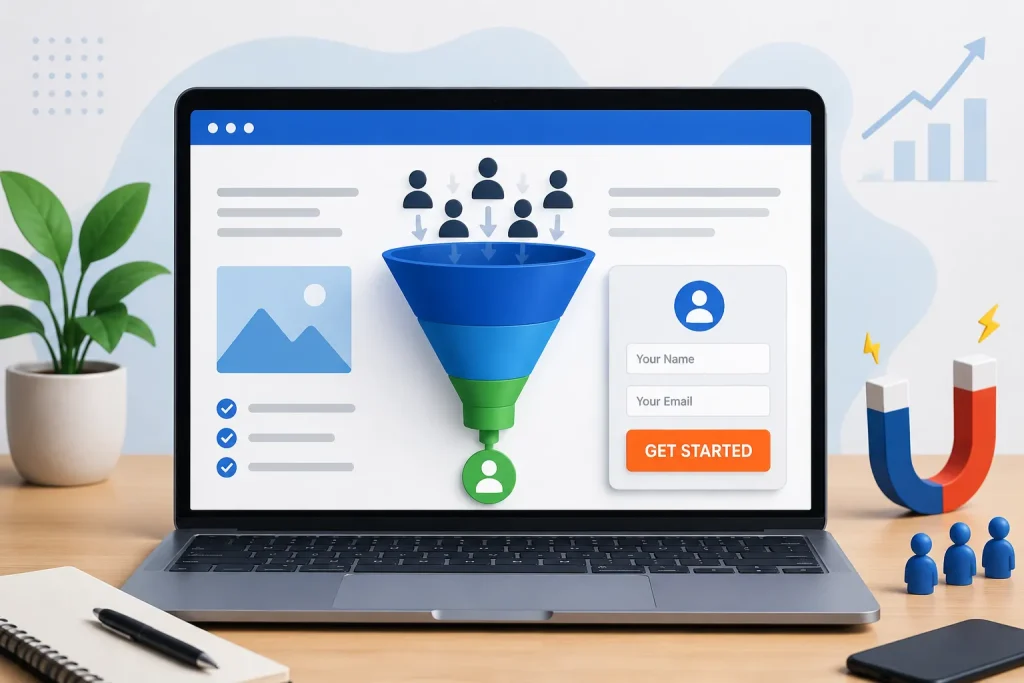
Have you ever visited a website, looked around for a few seconds, and then left without doing anything? It happens all the time. Thousands of visitors land on websites every day but only a small number actually sign up, download something, or contact the business. The difference between those who leave and those who take action often comes down to one thing: how effective the landing page is.
A well designed landing page does more than just display information. It guides visitors toward a clear action. When done right, it turns casual visitors into potential customers. This process is known as landing page conversion, and it plays a crucial role in online marketing success.
In this article, you will learn what landing page conversion means, why it matters, and practical ways to improve it so that more visitors become leads.
What Is Landing Page Conversion?
Landing page conversion refers to the moment when a visitor completes a desired action on a landing page. This action could be:
- Signing up for a newsletter
- Downloading an ebook or guide
- Filling out a contact form
- Registering for a webinar
- Requesting a product demo
- Making a purchase
When a visitor arrives on your page and takes one of these actions, they move from being just a visitor to becoming a lead or customer.
The goal of every landing page is simple. It should encourage visitors to take that next step. If a page attracts traffic but no one takes action, then the page is not doing its job.
Why Landing Page Conversion Matters
Many businesses spend time and money bringing visitors to their website through ads, search engines, or social media. But traffic alone does not bring results. What matters is what visitors do after they arrive.
Improving landing page conversion helps businesses in several important ways.
1. Better Return on Marketing Efforts
When more visitors convert into leads, the value of your marketing campaigns increases. Instead of needing more traffic, you make better use of the traffic you already have.
2. Higher Lead Generation
A strong landing page can turn simple website visits into valuable leads. These leads can later become paying customers.
3. Lower Advertising Costs
If your landing pages convert well, you can generate more leads with the same advertising budget.
4. Improved Customer Experience
A clear and helpful landing page makes it easier for visitors to understand your offer and decide whether it is right for them.
Key Elements of a High Converting Landing Page
Successful landing pages share several important features. Each element works together to guide visitors toward taking action.
1. A Clear and Compelling Headline
Your headline is the first thing visitors see. It should quickly tell them what the page is about and why they should care.
A strong headline usually focuses on a benefit. Instead of simply describing the product, it highlights what the visitor will gain.
Example:
- Weak headline: “Marketing Software Platform”
- Strong headline: “Grow Your Business Faster With Simple Marketing Tools”
The clearer the message, the easier it is for visitors to understand the value of your offer.
2. A Simple and Focused Design
Landing pages work best when they focus on a single goal. Too many links, images, or distractions can confuse visitors.
Keep the design simple and organized. Important elements should be easy to see and understand.
A focused layout helps visitors move smoothly from reading the page to taking action.
3. Strong Call to Action
A call to action tells visitors exactly what they should do next. This is often presented as a button or form.
Examples of clear calls to action include:
- Download the free guide
- Start your free trial
- Get your free consultation
- Join the newsletter
The call to action should stand out visually and use simple language that encourages action.
4. Valuable Offer
Visitors are more likely to take action if they feel they are getting something useful in return.
Common offers include:
- Free ebooks
- Checklists or templates
- Free trials
- Webinars or training sessions
- Discount codes
The more valuable and relevant the offer is, the more likely visitors are to convert.
5. Trust Signals
People often hesitate to share their information online. Trust signals help reassure visitors that your business is reliable.
Examples of trust signals include:
- Customer testimonials
- Reviews and ratings
- Security badges
- Industry certifications
- Well known client logos
These elements build confidence and make visitors feel more comfortable taking action.
How to Improve Landing Page Conversion
Even small changes can significantly improve results. Here are practical strategies that help turn more visitors into leads.
1. Understand Your Audience
The best landing pages speak directly to the needs of the audience.
Before creating or improving a landing page, ask questions such as:
- What problem does the visitor want to solve?
- What motivates them to take action?
- What concerns might they have?
When your page answers these questions clearly, visitors are more likely to trust your offer.
2. Focus on Benefits, Not Just Features
Visitors care more about how your product or service will help them than about technical details.
Instead of listing features alone, explain how those features improve the visitor’s situation.
For example:
Feature: Email automation tools
Benefit: Save time by sending automatic emails to your customers
3. Use Engaging Visuals
Images, illustrations, or short videos can make a landing page more engaging.
Good visuals can:
- Show how a product works
- Demonstrate results
- Make the page easier to understand
However, visuals should support the message rather than distract from it.
4. Reduce Form Fields
Long forms can discourage visitors from signing up. The more information you request, the less likely people are to complete the form.
Start with only the most important details, such as:
- Name
- Email address
You can always gather more information later once the relationship develops.
5. Improve Page Speed
Slow loading pages can cause visitors to leave before they even see your content.
Fast loading pages improve both user experience and search visibility.
Ways to improve page speed include:
- Compressing images
- Reducing unnecessary scripts
- Using reliable hosting services
Even a few seconds of improvement can make a difference.
6. Test Different Versions
One of the most effective ways to improve results is testing.
Testing allows you to compare two versions of a landing page to see which performs better. You might test:
- Different headlines
- Button colors
- Images
- Form length
- Call to action wording
Small changes can sometimes lead to big improvements.
Common Landing Page Mistakes to Avoid
Many landing pages fail because of avoidable mistakes. Recognizing these issues can help you improve performance.
Too Many Distractions
Navigation menus, multiple offers, or unrelated links can pull visitors away from the main goal.
Weak Value Proposition
If visitors cannot quickly understand what makes your offer valuable, they may leave without taking action.
Lack of Trust
Without reviews, testimonials, or other proof, visitors may hesitate to provide their information.
Poor Mobile Experience
Many users browse on smartphones. A landing page must look and function well on mobile devices.
The Role of Landing Pages in Digital Marketing
Landing pages are essential for many online marketing strategies.
They are commonly used for:
- Paid advertising campaigns
- Email marketing promotions
- Product launches
- Lead generation campaigns
- Webinar registrations
Instead of sending traffic to a general homepage, marketers often send visitors to a dedicated landing page that focuses on a specific offer.
This focused approach improves the chances that visitors will take action.
Measuring Landing Page Performance
To improve results, it is important to track how your landing page performs.
Common metrics include:
Conversion Rate
The percentage of visitors who complete the desired action.
Bounce Rate
The percentage of visitors who leave the page without interacting.
Time on Page
How long visitors stay on the page before leaving.
These metrics help identify areas where improvements can be made.
Future Trends in Landing Page Optimization
Landing pages continue to evolve as technology and user behavior change.
Some emerging trends include:
Personalization
Pages can adapt content based on the visitor’s interests, location, or previous behavior.
Interactive Content
Interactive elements such as quizzes or calculators can increase engagement.
AI Driven Insights
Advanced tools can analyze visitor behavior and suggest improvements automatically.
Businesses that stay updated with these trends often gain a competitive advantage.
Conclusion
Attracting visitors to your website is only the first step. The real success comes when those visitors become leads or customers.
A well crafted landing page guides visitors toward a clear action. With a strong headline, focused design, compelling offer, and clear call to action, you can dramatically increase the chances that visitors will engage with your business.
Improving landing page conversion is not about complicated techniques. It is about understanding your audience, presenting value clearly, and creating a smooth path for visitors to take the next step.
By applying these strategies and continuously testing improvements, businesses can transform ordinary website visits into meaningful opportunities for growth.